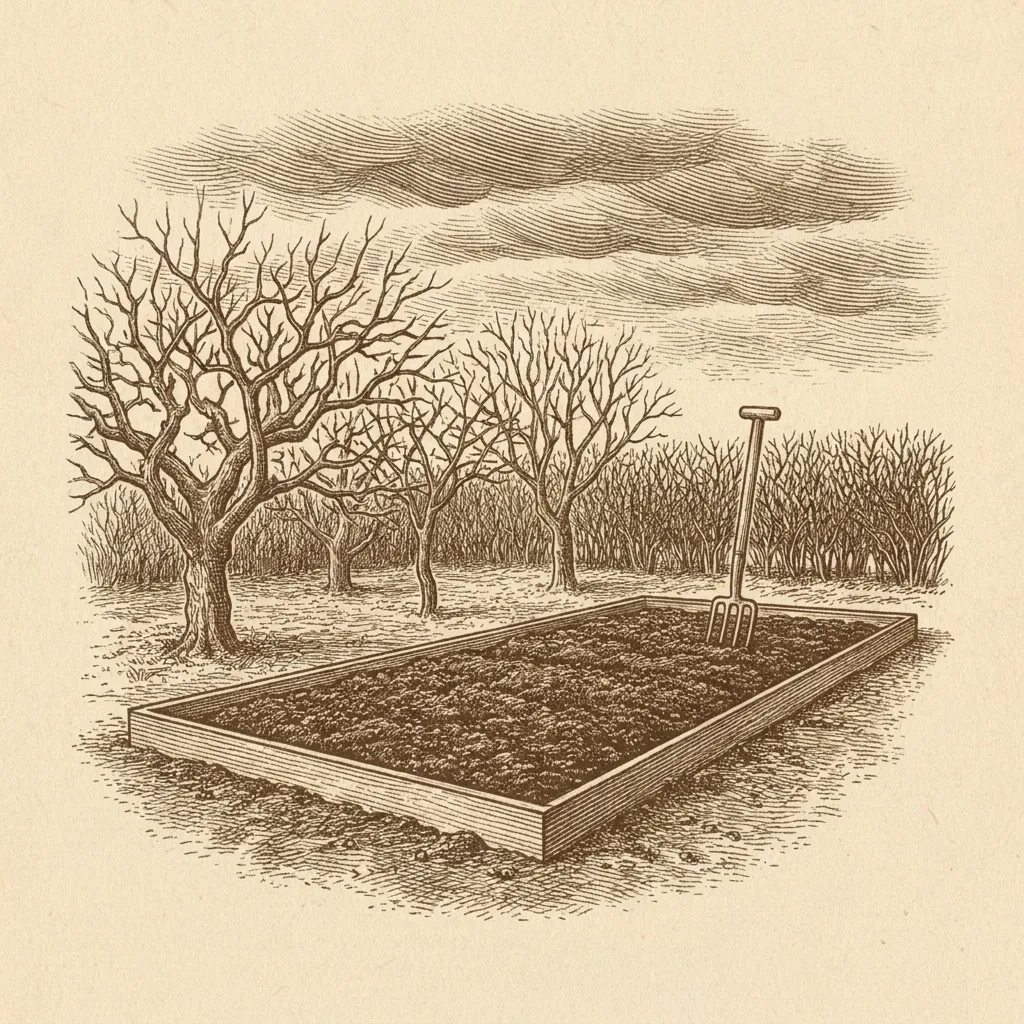
By September there is usually a bed or two with nothing in it, and the temptation is to tidy it, look at it, and leave it until spring. That is the one choice that costs you.
Four or five months of British winter rain compacts bare soil, washes soluble nutrients down past the root zone, and breaks down the crumb structure that took a season to build. Weeds germinate in every mild fortnight. By March the bed is heavy, grey and uninviting, and you lose the first warm week of the year getting it sowable again.
Covered soil comes through the same winter in a different state, and covering it is not much work.
Option one: compost on the surface
The simplest option, and usually the best. Spread two to five centimetres of well-rotted compost across the bed and leave it there.
Over winter, worms pull it down into the top layer for you and rain washes in the finer material. By spring you have a dark, crumbly, weed-free surface to rake level and sow straight into, and the structure and fungal networks underneath are left intact rather than smashed up.
Autumn suits this best: the compost gets a whole winter to work in, and a mulched bed needs no weeding in February.
Option two: a green manure
If you have more bed than compost, sow a green manure: a crop grown to protect and feed the soil rather than to eat. It covers the surface, holds nutrients in living tissue instead of letting them leach away, and keeps the soil open with its roots.
Seed for these is sold by weight rather than in little packets, so it is worth buying from a supplier who takes it seriously. Tamar Organics carry the usual green manures organically, which matters here more than for most seed, since the whole point is what you are putting into the soil.
For sowing in late summer and early autumn:
- Field beans are the most useful for most people: hardy, nitrogen-fixing, and easy to deal with in spring. Sow August to October.
- Grazing rye gives the most bulk and the best root system, and shrugs off anything a British winter offers. Sow through to early November. It is vigorous. As it breaks down it releases substances that suppress germination, which is what holds weeds down all winter. Clear it at least three weeks before you sow anything into that bed.
- Winter tares fix nitrogen and are hardy, often sown alongside rye.
- Phacelia is quick, pretty, and adored by hoverflies, but only half hardy: a cold winter kills it, which is no great loss, since it then acts as its own mulch.
- Mustard is fast and cheap and dies off in frost, but avoid it if you grow a lot of brassicas, since it belongs to the same family and shares their problems.
Whichever you choose, it needs dealing with in spring. Cut the top growth, leave it on the surface or under cover, and let it break down before you sow. Phacelia and mustard are quicker crops: they can be turned in six weeks after sowing. If that sounds like more work than spreading compost, it is. Compost is the easier answer for a small garden.
Option three: just cover it
If you have neither compost to spare nor time to sow a green manure, cover the bed with cardboard, weighed down, or a sheet of something light-excluding.
This does less for the soil than the other two options, but it does the essential job: keeps rain off the surface, stops weeds germinating, and gives the worms a dark, undisturbed place to work. Weedy or newly taken-on ground responds best of all, since a winter in the dark clears couch grass and bindweed more thoroughly than any amount of pulling.
Plain brown cardboard, tape and staples removed, breaks down over the season. Avoid anything glossy or heavily printed.
What not to do
Do not dig it over and leave it rough. The old idea of letting frost break down clods is durable folklore, and it costs more than it gives: it destroys structure, buries the surface life built up all season, and drags fresh weed seed into the light where it can germinate. Leaving the soil alone and covering it gives you the same friable spring surface without any of that.
Leave some roots in, not all of them. Cut peas and beans off at ground level and leave their roots, since the nodules on them carry nitrogen. Brassica stumps are better out, since they harbour problems over winter. Everything else is a judgement call: roots left to rot in place feed the soil rather than clutter it.
Do not worry about it looking untidy. A bed under a rough compost mulch, or a scruffy stand of field beans, is doing more for you than one raked to a perfect tilth and left bare to the weather. Winter gardens are meant to look like something is happening slowly.