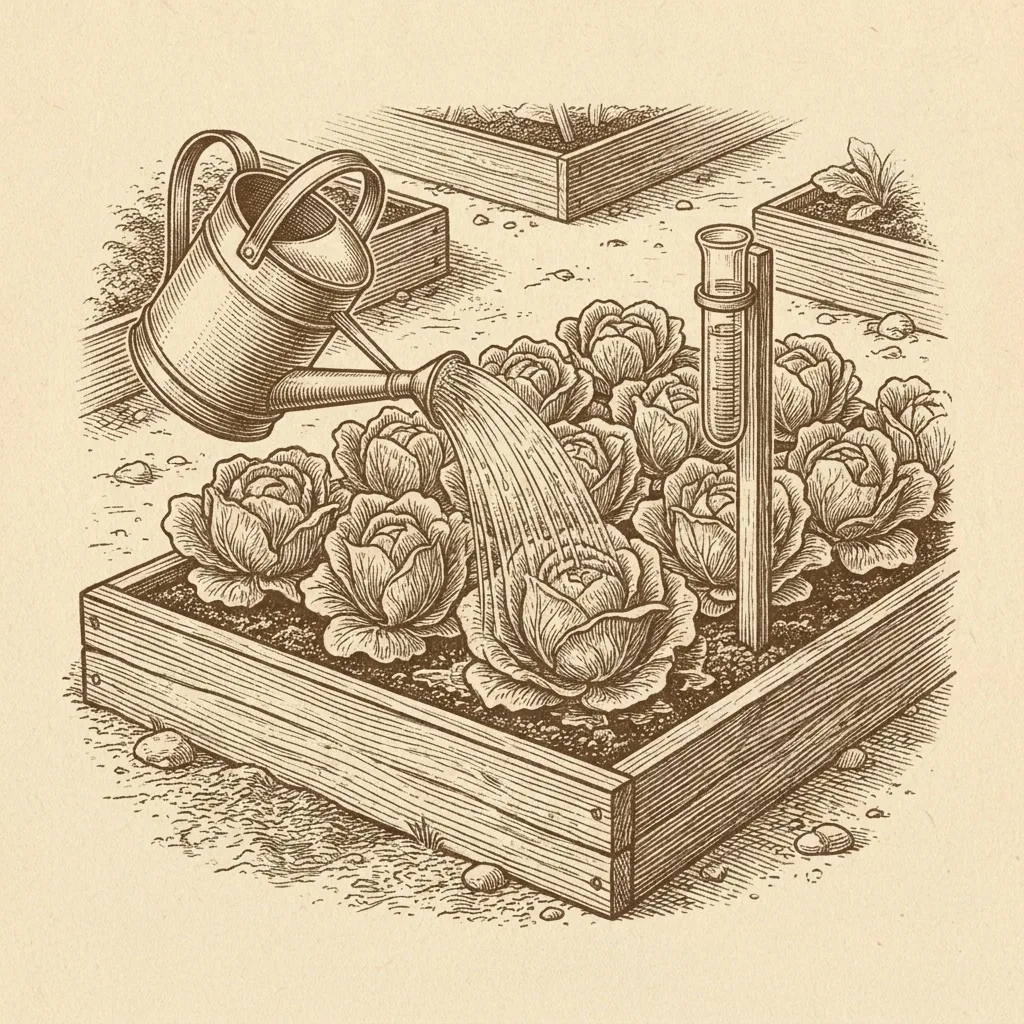
The single most useful number in garden watering is this one: one millimetre of rain is one litre of water per square metre. That is it. That is the whole conversion.
It matters because it turns a vague forecast into something you can act on. Ten millimetres overnight puts ten litres on every square metre of your beds, a proper soak. Two millimetres damps the surface and reaches almost nothing. A "rainy day" that delivered 1mm has done you no favours, and the plants that looked perkier after it were responding to humidity, not water.
How much do vegetables actually need?
In a dry spell, a productive vegetable bed wants somewhere around 20 to 25 litres per square metre per week, from rain, from you, or both. Treat that as a rule of thumb rather than a rule: the RHS pointedly declines to give a figure, since soil type decides what a bed actually holds, and the same 20 litres runs straight through sand while it sits about in clay for a week. Thirsty crops in full growth sit at the top of that range; anything under a decent mulch, or already deep rooted, manages on less.
Split it into one or two goes, not seven. A single 20-litre soak once a week beats three litres every evening, and it is not close.
The crop tells you more than any figure can. Peas and beans want water at flowering and again a fortnight later, or the pods will not set. Potatoes want a drink every ten to fourteen days once the tubers are marble-sized. Carrots and beetroot can go a fortnight without rain before they need anything. Leafy crops want it steadily throughout; courgettes want it constantly, from planting to the last fruit.
Why little and often is the wrong instinct
A light daily watering wets the top two or three centimetres, then evaporates. With everything it needs at the surface, the plant has no reason to send roots down, so it grows a shallow root system entirely dependent on you. Miss two days in August and it wilts.
Water deeply and less often, and the opposite happens: moisture goes down, roots follow it, and the plant gets progressively harder to kill. By midsummer a deeply watered bed can go a week or more between waterings without complaint.
The test is simple. Push a finger in after watering. Dry at your second knuckle means you have not watered, you have decorated.
Where to put it
Water at the base of the plant, not over the leaves. Wet foliage overnight invites mildew and blight, and most of what lands on a leafy crop never reaches the roots anyway.
Early morning is best, evening is fine, and the middle of a hot day is wasteful, not disastrous. If a plant is wilting badly at noon, water it then.
What needs more, and what needs less
Some crops are genuinely thirsty and will tell you if you get it wrong:
- Tomatoes want consistency above all. Erratic watering, dry then drenched, causes blossom end rot and split skins rather than a straightforward shortage. Small, frequent swings beat big, rare ones.
- Courgettes, squash and cucumbers have enormous leaves and lose water fast. In a hot week they take everything you give them.
- Runner beans drop their flowers if they go dry at the wrong moment, the usual reason for a plant thick with blossom and no beans.
- Salad and leafy greens bolt when stressed, so keep them steady.
- Anything newly sown or just planted needs light, frequent watering until it roots, the one exception to the soak-it-properly rule, since seedlings have no root system to reach down with.
And the ones that mostly want leaving alone: established root crops like carrots and parsnips, which fork and split if flooded after a dry spell, onions and garlic once bulking up, and potatoes once the foliage has started to yellow.
Mulch does more than watering does
A surface layer of compost is the closest thing to free irrigation: it shades the soil, cuts evaporation, and stops the surface baking into a crust that sheds water instead of letting it soak in.
Undisturbed soil helps for the same reason: the channels worms and old roots leave behind carry water down rather than letting it pool on top, so a bed left alone copes with a heavy shower far better than one just turned over.
So, do you need to water today?
Work backwards:
- How much rain has actually fallen in the last week, in millimetres? Not "did it rain", but how much.
- Add whatever you have put on by hand.
- If the total is well under 20 litres per square metre and the finger test says dry at two knuckles, water properly.
- If it is close, wait a day. Almost nothing in a vegetable garden is harmed by being a day late, and plenty is harmed by being permanently damp.
The forecast tells you what might happen. What you want is what did happen, and a rain gauge or a decent local rainfall figure settles the argument faster than looking at the sky.
This page is about how much water vegetables need. For the technique itself, watering cans versus hoses, mulching, and saving rainwater, there is a short guide on Did it rain? that covers the whole garden rather than just the veg beds.