The first autumn frost is the most consequential date in the vegetable year, and almost nobody knows theirs. It ends half the garden in a single night and improves the other half, so it pays to understand it rather than be surprised by it.
When to expect it
Across the UK:
- Late October in the Scottish glens, the Pennines and anywhere high up. Frost hollows can go earlier still.
- Through November for most of inland England and Wales, north before south.
- Late November into December on the south coast, in the far south west, and in city centres, which run several degrees warmer than the countryside around them.
These are averages of the first air frost, measured a metre or so above the ground. A ground frost, the one that actually touches your plants, arrives a week or three earlier, and an average is the middle of a range, so one year in two beats it. Be ready a fortnight before your date rather than on it. The gardeners who lose a crop are not the ones who did not know the average. They are the ones who treated it as a deadline.
Your own garden matters more than the region. Cold air is heavy and flows downhill like water, pooling at the bottom of slopes and against walls and fences that block its way. A garden in a dip can frost a fortnight before one on a slope half a mile away, and a city courtyard may barely frost at all.
Reading the night
Frost needs three things. Miss one and you are usually safe:
- Clear skies. Cloud holds the day's heat in. An overcast night at 2°C is safer than a clear one at 4°C.
- Still air. Wind mixes the atmosphere and stops cold air settling at ground level.
- Low humidity. Damp air releases heat as moisture condenses, which props the temperature up.
The forecast can mislead you here: air temperature is measured a metre or so off the ground, and on a clear, still night the ground can be two to four degrees colder than the number you are shown. A forecast of 3°C on a clear, calm night means a ground frost is likely. The same 3°C under cloud with a breeze means nothing at all.
What dies at the first touch
These are finished by the first real frost, and there is no saving them:
Tomatoes, courgettes, squash and pumpkins, French and runner beans, cucumbers, sweetcorn, basil, potatoes (the foliage, at least), and dahlias if you grow them among the veg.
Pick every tomato, green ones included, in the last warm week. They ripen indoors in a paper bag or on a sunny windowsill, and green tomato chutney is a fine thing. Cut winter squash before the first frost and let it cure somewhere warm and dry for a fortnight, because frosted squash will not store. Harvest the beans, and leave pea and bean roots in the ground when you clear the tops: they carry nitrogen your next crop can use.
What gets better
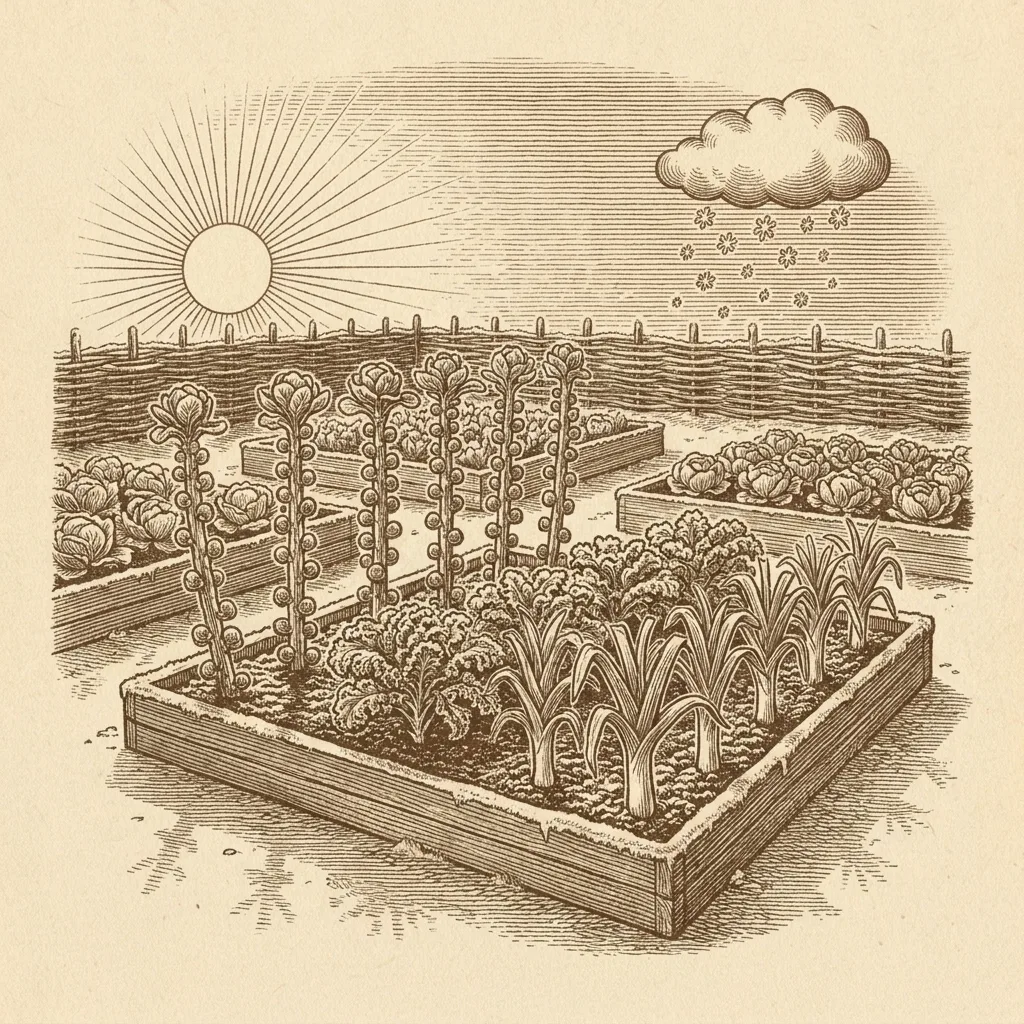
The other half of the garden is waiting for frost, not dreading it. Parsnips are the classic: frost converts some of their starch to sugar, and a parsnip lifted after a hard night is a genuinely different vegetable from one lifted in September. Brussels sprouts, kale, leeks, swede and savoy cabbage all sweeten and firm up the same way. Winter salads such as lamb's lettuce and winter purslane sit under frost and shrug it off entirely.
If you have these in the ground, the first frost is good news. The correct response is to do nothing at all.
What is worth covering
A layer of horticultural fleece buys you roughly two to three degrees, which turns a light frost into no frost, not a hard one. Two layers beat one, and an air gap beneath the fleece beats it lying flat on the leaves, since anything touching frozen fabric frosts anyway.
Cover half-hardy things you are trying to carry a few more weeks, late salads you want still growing rather than merely surviving, and anything just planted that has not rooted yet. Do not bother with the tender crops above, which are better harvested than nursed, or the hardy ones, which do not want it.
Cover in the late afternoon, while there is still warmth in the soil to trap, and take it off in the morning so light and air get in. Fleece left on permanently in mild weather makes soft, drawn growth that is less hardy than if you had left it uncovered.
This page is about which crops care and when to expect the cold. For the covering itself, moving pots, guarding against frost pockets and the rest of the practical drill, there is a short guide on Will it frost?.
Bare soil is the thing to cover
The bed matters more than the plant. Soil left bare over winter is battered by rain, loses structure, leaches nutrients, and comes to spring compacted and lifeless.
A few centimetres of compost spread on the surface in autumn protects it, feeds it, and will have been pulled down by worms by the time you want to sow. You get a bed ready in March without touching a spade, worth rather more than an extra fortnight of courgettes.