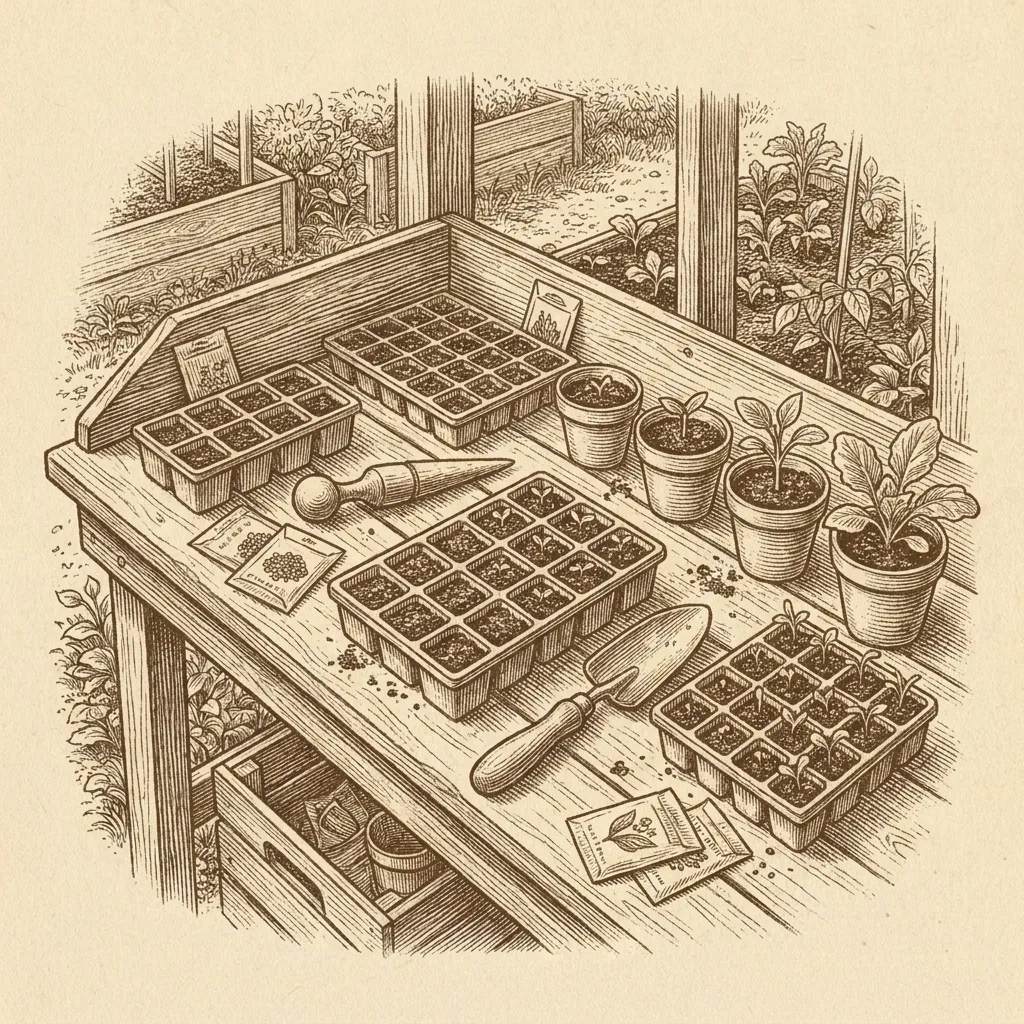
Every sowing calendar you read was written for somewhere else. "The UK" spans about six weeks of growing season from the Isles of Scilly to Aberdeenshire, so a date that is generous in Cornwall is optimistic in the Pennines. Treat everything below as the middle of the country: a fortnight earlier south and coastal, later north or high up.
Sowing dates are frost dates in disguise. Nearly every "sow after" in spring means after your last frost, and nearly every "sow before" in autumn means giving a crop warmth enough to root before the first one. Know your own two frost dates and you can throw most calendars away.
January
Not much, and that is fine. A propagator or warm windowsill lets you start onions from seed, and chillies if you want the longest possible season, since they need every week going. Broad beans can go in under cover.
Otherwise this is a month for catalogues and turning compost. If you are ordering seed, Tamar Organics are worth a look: organic, open-pollinated varieties from a small outfit near Launceston, better than a supermarket rack of F1 hybrids bred for a lorry, not a garden.
Resist sowing tomatoes now. They turn leggy and sulky on a dark windowsill, and a March sowing catches them up by May.
February
Onions and leeks from seed, under cover. Early peas for shoots. Broad beans direct if the soil is not waterlogged, though an autumn sowing will already be ahead of them.
Towards the end of the month start the first salads and spinach under cover, and chit early potatoes somewhere light and frost free.
March
The month everything wakes up. Sow tomatoes indoors now, and aubergines if you grow them. Outdoors, once the soil has warmed enough that weed seedlings are appearing, sow parsnips, early carrots, beetroot, spinach, rocket, radish and the first lettuce.
A quick soil-temperature test: if the weeds are not germinating, neither will your seeds. Bare, cold, claggy soil rots a carrot seed rather than sprouts it.
April
Peak sowing. Carrots, beetroot, chard, spring onions, lettuce, spinach, kohlrabi, turnips and radish direct. Brassicas for the winter garden go in modules now: kale, sprouting broccoli, cabbage, Brussels sprouts.
Courgettes, squash, cucumbers and sweetcorn can be started indoors late in the month, ready to go out once frost is done with you. Do not be tempted to plant them out yet, whatever the shops are selling.
May
The frost gate. The last frost falls in the first half of May inland, earlier on the south coast, later in Scotland and the uplands.
That is the cautious figure, not the average. The thirty-year average puts it nearer mid April, but an average is beaten half the time, a poor bet when the forfeit is every tender plant you own. The date to plant by holds in nine years out of ten, roughly three weeks later. Hence May.
Once it has passed, out go the tender crops: courgettes, squash, beans, sweetcorn, tomatoes, cucumbers. Direct sow French and runner beans, more carrots and beetroot, and the first successional salads. Sow a short row of lettuce every two or three weeks until August and you will never have a glut or a gap.
June
Still plenty of time. French beans, beetroot, chard, carrots for autumn, kale for winter, and the last sensible sowing of sweetcorn in the first week.
This is also the month for a second sowing of anything that went in early and is nearly done. Clear an early crop and something else can go in the same day.
July
The turn of the year, though the garden does not look like it. Early July is the last reliable sowing for autumn carrots and beetroot; after that the days are shortening and root crops run out of growing time.
What you should be sowing now is the winter garden: spring cabbage towards the end of the month, oriental leaves, chard for overwintering, and more salad. Winter food is sown in summer, which catches out nearly every first-year gardener.
August
Later than people think, and more useful than people think: it fills the beds that early potatoes and broad beans have just vacated.
Sow now: spinach, chard, rocket, mizuna, mustards, pak choi and other oriental leaves, land cress, winter lettuce, spring onions, turnips and radish. Coriander does better now than in June, since it is less inclined to bolt as the heat goes out of the days. Overwintering onion sets can go in from late August.
North and south part company here: the usual fortnight of leeway is not enough. Finish outdoor sowings in the first week of the month in Scotland and the north; in the south you can keep going to the middle, and a little beyond under cover. It is not the cold that stops you, it is the light: a seedling sown into shortening days must finish growing before the year runs out.
Carrots and beetroot for a proper autumn root are past it in most of the country, and there is no point starting a courgette. The salad and leaf sowings you make in August carry you through to Christmas.
A hot, dry August turns this into a germination problem rather than a calendar one. See "Sowing in a hot, dry spell" below for how to manage it.
September
Lamb's lettuce, winter purslane, rocket, mizuna and hardy winter salads, all of which sit through the cold and pick up again in spring. Winter lettuce under cover. Spinach early in the month.
Overwintering onion sets and Japanese onions go in now. Garlic can go in from late September, though October and November are better in most places, since it wants a proper cold spell to split into cloves.
October
Garlic, and broad beans towards the end of the month in milder areas. Hardy salads under cover will grow slowly all winter and be worth ten times what they cost you.
Otherwise this is the month for clearing, mulching and getting beds ready rather than sowing. An empty bed covered before winter is a bed you do not have to fight in March.
November
Broad beans, the overwintering sort, sown direct. Aquadulce Claudia is the usual choice and it earns its reputation. Garlic if you have not got it in yet.
That is about it, and there is no shame in it. Winter is the compost heap's turn to do the work.
December
Nothing outdoors that will not sulk. If you want something to fuss over, sow microgreens or pea shoots on a windowsill and pick them in a fortnight.
Sowing in a hot, dry spell
Any dry spell from June onwards can stop a sowing before it starts, and only one of the two problems working against you is obvious.
The obvious one is a baked surface: it crusts over, so seed either never gets moisture or dries out the day after it germinates. The less obvious one is that lettuce and spinach seed will not germinate at all once the soil is above roughly 25°C while it takes up water. It is not dead seed and it is not sulking. It is a Mediterranean survival trick, dropping into dormancy rather than sprouting into a summer that would kill it, and no amount of watering talks it round.
So sow around the heat rather than into it. Draw out the drill, water along the bottom of it, let that soak away, then sow into the damp and cover with dry soil. It feels back to front the first time, but it roughly doubles your strike rate, and it is the RHS's own recommendation for dry-soil sowings after May.
Sow in the evening, not the morning, lay a plank or a length of fleece over the row until you see the first shoots, and keep the watering steady. The commonest way a summer sowing dies is not failing to germinate, it is germinating on the Tuesday and being left to dry out on the Wednesday.
When you have missed the window
You will miss windows. Everybody does, and the calendar is not a moral document.
If you are late in spring, sow anyway. A fortnight behind is a fortnight behind, not a failure, and warmer soil often means faster germination that closes half the gap on its own.
If you are late in autumn, change crop rather than push your luck. There is no rescuing an August carrot sowing, but the same square metre will grow rocket, mizuna or winter lettuce, ready in six weeks. The bed does not care what is in it.
And if a sowing fails outright, clear it and put something else in the same day. That is the advantage of leaving the soil alone: no digging over, no waiting, no preparation. You rake the surface, you sow, you carry on.